Where do I get moving boxes? Start with home improvement stores, packing-supply retailers, or a moving company for new cartons. For free boxes, ask people who have recently moved, check neighborhood giveaway groups, and contact local stores about spare shipping boxes. You do not have to get every carton from the same place. A practical approach is to reuse clean, sturdy boxes for everyday belongings and buy specific sizes for awkward or fragile items. Before collecting a carload, though, check what you actually need to pack. The right combination can save you from buying unnecessary supplies or repacking unsuitable boxes later.

Where To Buy New Moving Boxes
Home improvement stores, office supply shops, and packaging retailers are useful starting points for new cartons. The Home Depot and Lowe’s both sell moving boxes, but check availability at your chosen store before traveling. Online suppliers are another option when delivery fits your schedule. Compare actual measurements rather than relying on labels such as “large,” which do not tell you whether an item will fit. Also, check whether the price covers one box or an entire pack.
Ask a moving company about buying moving boxes and packing supplies, even when you plan to do the packing yourself. Consider ordinary cartons alongside wardrobe boxes, dish packs, and picture boxes. For a household kit, compare its contents with your belongings rather than ordering by bedroom count alone. Ask whether tape, cushioning, and dividers come with the package or require separate purchases. Confirm collection arrangements, delivery charges, and return conditions before paying. Buying a useful selection is better than choosing the biggest bundle and discovering that most cartons do not suit what you own.
Where Do I Get Moving Boxes For Free?
Start with people you already know. Ask friends, coworkers, or neighbors who have recently moved whether they have empty cartons to pass along. Then check local Buy Nothing groups, Freecycle, or neighborhood giveaway listings. Search for both “moving boxes” and “packing boxes,” and post a specific request rather than waiting for the perfect offer.
For example, ask for clean, dry cartons with all their flaps attached, and mention when you can collect them. Before arranging pickup, request a photograph and an approximate breakdown of sizes. Twenty tiny delivery cartons may be less useful than six sturdy boxes that fit your packing plan.
Also, ask whether the owner has kept the boxes indoors. Confirm the collection location privately and agree on a time instead of assuming you can arrive whenever convenient. If the boxes are still in use, ask when the person expects to finish unpacking. Keep a backup plan, however, because a community request does not guarantee availability. Free boxes are helpful when their condition, size, and collection timing match your needs.

Asking Local Stores For Spare Boxes
Bookstores, pharmacies, office supply shops, and grocery stores are reasonable places to ask about spare delivery cartons. However, treat this as a request, not an expectation that a business must provide them. Call first and ask whether staff can set aside suitable boxes before breaking them down. Find out when you should collect them and whom to speak with when you arrive. A simple request for medium or small cartons with complete flaps is more useful than asking for anything available. At a grocery store, avoid boxes with food residue, damp patches, or noticeable odors.
Also, do not assume an open produce tray will work like a closed moving carton. Check whether the container can close securely and accommodate the items you intend to pack. Ask permission before collecting anything from a loading area or recycling enclosure. Keep your request manageable and arrive at the agreed time. If a store cannot help, move on politely. Several nearby calls are a more practical starting point than driving around hoping to find usable cardboard.
Checking Whether Used Boxes Are Suitable
Inspect each reused box before bringing it into your packing area. Open the flaps, look inside, and check the bottom corners and seams. Reject cartons with moisture damage, visible mold, insect activity, greasy surfaces, or strong smells. Next, examine the structure. Look for crushed corners, torn handles, split seams, or panels that no longer hold their shape. Extra tape should not be your solution to cardboard that is already badly damaged. Assemble the box and make sure its flaps meet without forcing them into place.
Then consider the intended contents rather than treating every usable carton as interchangeable. A lightweight delivery box might suit soft clothing but be a poor choice for heavy kitchen items. Remove old address labels for privacy, and cover previous room names so they do not confuse anyone unloading. Keep approved boxes dry and separate from cartons you intend to discard. Recheck them as you pack. If the base sags or a handle begins to tear, stop and transfer the contents before sealing the box.

Matching Box Sizes To Your Belongings
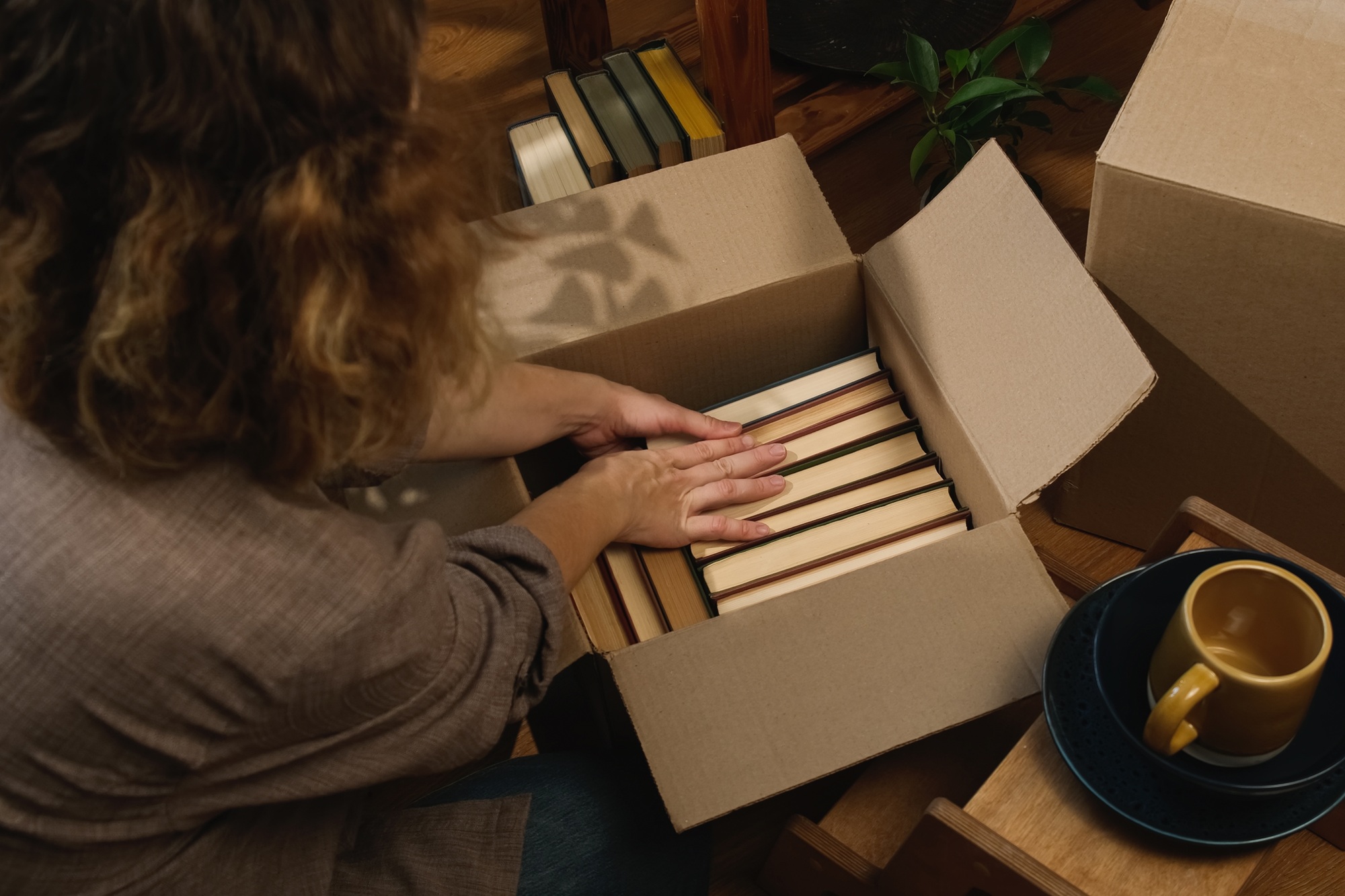
Choose small, sturdy cartons for dense items such as books, and save larger boxes for lighter belongings such as pillows and bedding. A large box is not an invitation to fill every inch with heavy objects. The guide to packing books for moving explains why smaller cartons and careful packing matter for a collection. For other belongings, allow enough room for cushioning without leaving the contents loose. Check any stated load limit, but do not treat that number as a target weight you must reach.
Where do I get moving boxes for dishes, mirrors, or hanging clothes? Ask packaging suppliers about cartons designed for those items. Measure before buying, and check whether protective inserts or hanging rails come with the box. A picture carton still needs suitable padding, while a wardrobe carton needs its intended support bar to hold hangers. Keep original electronics packaging when it remains sound and includes the fitted protective pieces. For an unusually shaped or valuable item, discuss the packing method with your mover before improvising a container. Box selection and interior protection need to work together.
Working Out How Many Boxes You Need
Begin with your belongings rather than a fixed number of boxes per bedroom. Two equally sized homes can contain very different amounts of kitchenware, clothing, books, and stored possessions. Walk through every room, then open cupboards and inspect the garage, basement, or storage unit. Decide what you will keep before buying cartons for things you intend to donate. Next, separate your needs into small, medium, large, and specialty boxes.
Start packing one representative area, such as a bookshelf or kitchen cabinet, and use that experience to refine your estimate. This is more useful than assuming every room needs the same supplies. Also, note what can travel in containers you already own, provided they suit your mover’s requirements. Keep a small reserve of unused cartons for belongings you cannot pack until the final day. When buying a kit, check its size mix and compare it with your own inventory. Identify a backup supplier before you run short. A practical estimate includes a way to obtain missing sizes, not just an optimistic total.

Comparing The Real Cost Of Your Options
Compare your options using the boxes you can actually use, not the number advertised in a bundle. With free cartons, consider collection time, travel, and how many boxes you may reject after inspection. With new cartons, include delivery charges and any tape or protective materials you still need. For example, a free collection across town may not be worthwhile if it contains only a few suitable boxes. On the other hand, a nearby neighbor’s complete set could cover much of your packing without a purchase. You can also ask about reusable moving totes where a rental service operates.
Before agreeing, compare the collection or delivery arrangements, rental period, return deadline, and replacement charges. Check that the containers suit your mover’s loading plan. Alternatively, inspect the storage bins and suitcases you already own before buying duplicates. Do not force fragile items into an unsuitable container simply because it is available. Often, the sensible approach is a mix: reuse sound containers for ordinary belongings and buy the specific boxes you cannot replace with something suitable.
Where Do I Get Moving Boxes At Short Notice?
When packing cannot wait, start by calling nearby retailers or moving-supply providers to confirm the sizes available for collection. Check opening hours, ask whether staff can hold the cartons, and make sure the flattened boxes will fit in your vehicle. Online listings are useful, but do not plan around a delivery date that falls after your packing deadline. Meanwhile, send a specific message to nearby friends or a neighborhood group explaining what you need and when. Set a cutoff for waiting on replies so the search does not consume your remaining packing time.
Prioritize the cartons required for fragile or awkward items, then work through ordinary household belongings. Also, collect tape, cushioning, and markers during the same trip rather than returning for forgotten supplies. If you have booked packing help, confirm what the crew will bring before buying duplicate materials. Avoid making a poor box fit the job out of urgency. A short conversation with your mover about an unpacked item is better than concealing it inside a damaged or unsuitable carton.

Reusing And Recycling Boxes After Your Move
As you unpack, set aside cartons that remain clean and structurally sound. Offer them to another household, a local giveaway group, or someone at work preparing to move. Describe their condition and sizes clearly, and remove personal address labels before handing them over. Keep only the boxes you genuinely expect to use again, such as suitable original packaging for delicate electronics. Flatten the others for storage while you arrange collection. For cartons that are no longer useful, follow the EPA’s cardboard recycling guidance: empty and flatten boxes, keep recyclables clean and dry, and check your local program’s instructions. Keep loose plastic wrapping out of the cardboard recycling load.
Also, ask your collection provider how to handle a quantity that will not fit inside your bin. Do not leave a large pile beside it and assume the crew will collect everything. Before putting boxes outdoors, check the weather and collection arrangements. Finishing the move with a clear reuse or recycling plan prevents spare packaging from becoming a permanent obstacle in your new home.

Preparing For An Easier Packing Day
The answer to “where do I get moving boxes?” usually involves more than one source. Start with reliable options for new cartons, ask locally about reusable boxes, and choose each container for its intended contents. Inspect what you collect, leave room for protective materials, and keep a backup source available. You do not need to collect the largest possible pile. You need enough suitable boxes to pack your belongings without rushing, overfilling, or repeatedly changing containers. Once you have that selection, organize your supplies by room and begin with items you rarely use.
For a move in Northeast Ohio or farther afield, Morse Van Lines offers moving supplies and packing assistance alongside its moving services. Contact the team to discuss your inventory, ask about the boxes and materials available, and confirm what your chosen service includes. Whether you plan to pack everything yourself or need help with specific belongings, explain those preferences before ordering. That conversation can help you match your supply list to the work you actually plan to do.